This is not about politics.
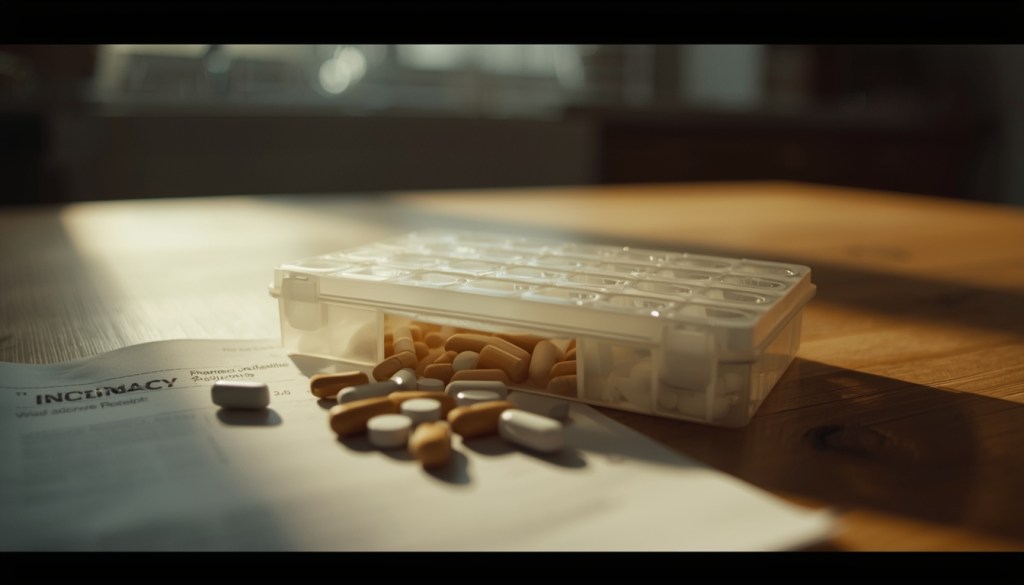
It is about the pill you take every morning. The insulin in the refrigerator. The cancer drug your parent has been on for two years. The medication your child needs to get through the school day.
On April 2, 2026 — exactly one year after the original “Liberation Day” tariffs — President Trump signed a proclamation imposing 100% tariffs on branded, patented pharmaceutical imports into the United States.
One hundred percent.
If a drug costs a manufacturer $50 to import, the tariff makes it $100. The cost does not disappear. It moves — from the pharmaceutical company’s balance sheet to the American patient’s bill, to the insurance premium, to the hospital system’s budget, to the employer’s benefits cost, and ultimately back to the worker’s paycheck.
The announcement triggered the worst single day in the US stock market since the COVID-19 crash of 2020. International markets — the Nikkei, the Shanghai Composite, South Korea’s Kospi — all plunged. The Yale Budget Lab estimates the broader tariff regime is already costing American households between $650 and $1,340 more per year. The pharmaceutical tariffs, phasing in by July 31 for major companies, are a separate and additional hit.
This is what is coming. Here is what you actually need to understand.
The Scale of American Dependence Nobody Talks About
Start with a number that should be impossible to ignore: 61% of American adults — 157 million people — fill at least one prescription per year. Add 20% of children — another 15 million. That is most of the country.
Now understand where those drugs come from.
In the past decade, US pharmaceutical imports have more than doubled in value, from $73 billion in 2014 to over $215 billion in 2024. The US imports over 828,000 metric tons of pharmaceuticals annually — seven times the 2000 level.
China and India supply 70-80% of US generic drugs, with India providing approximately half of all finished generic drugs while depending on China for 70-80% of its active pharmaceutical ingredients. The US manufactures a fraction of what it consumes. The supply chain is deeply, structurally global.
The tariffs announced on April 2 apply specifically to branded, patented drugs — not generics, which account for 92% of US retail prescriptions by volume. That nuance matters enormously. Most Americans filling prescriptions at CVS or Walgreens will initially see limited impact, because most of what they fill is generic.
But here is what that distinction obscures.
Branded drugs account for only 15% of prescriptions — but nearly 90% of drug spending. The drugs most likely to be affected are the most expensive ones: the cancer treatments, the biologics for autoimmune diseases, the specialty medications for rare conditions. The drugs that patients cannot simply switch to a generic for, because no generic exists.
The people most exposed are not the ones taking atorvastatin for cholesterol. They are the ones taking Keytruda for cancer. Dupixent for severe eczema. Ozempic for diabetes. The drugs that already cost tens of thousands of dollars per year before the tariff.
How a 100% Tariff Actually Reaches Your Bill
The mechanism by which a tariff on pharmaceutical imports translates into a patient’s out-of-pocket cost is not straightforward. It passes through multiple layers. Understanding those layers is the difference between knowing this is coming and being surprised when it arrives.
Layer one: the manufacturer. A pharmaceutical company importing a branded drug from Ireland — the single largest exporter of branded pharmaceuticals to the US, where drug imports from Ireland in March 2025 were five times higher than in March 2024 — faces a choice. Absorb the tariff and accept lower margins. Or raise list prices to preserve margins.
History is instructive here. Drug companies entered 2026 by raising list prices on 872 different brand-name medications — including 16 companies that had already struck deals with the Trump administration to lower prices. The pattern is consistent: when costs rise, list prices rise.
Layer two: insurance premiums. The primary impact on patient pocketbooks for most Americans will be indirect — premiums would likely rise as payer spending on drugs increases. Insurance companies and employers that fund health benefits are not going to absorb pharmaceutical cost increases out of goodwill. Those costs flow into premium calculations. The premium increase happens at open enrollment, when most people do not connect it to a tariff imposed months earlier.
Layer three: hospital budgets. Hospitals face a double burden. As major purchasers of medications, they experience direct cost increases that could add 20% to their drug expenses. Hospitals that face higher costs either raise procedure prices, reduce services, or both. The cost diffuses through the healthcare system in ways that are difficult to trace but real.
Layer four: the uninsured. For the 27.4 million uninsured Americans who face full list prices without insurance protection, the tariff impact is not indirect. It is immediate and direct. These are the Americans least equipped to absorb higher drug costs — and most likely to skip doses, delay treatment, or forgo medication entirely when prices rise.
Cost-related medication non-adherence already affects 30% of American adults. The United States already pays on average three to four times more than other developed countries for the same branded drugs — leaving about a quarter of Americans unable to afford the branded drugs they need. Adding a 100% tariff to drugs that are already unaffordable for many Americans does not make them more affordable.
The Supply Chain Problem Is Bigger Than the Price Problem
The tariff’s impact on drug prices is the most visible concern. But experts at Johns Hopkins, the Brookings Institution, and the Information Technology and Innovation Foundation are raising a less visible but potentially more serious risk: supply disruption.
The US pharmaceutical supply chain has single points of failure that the tariffs, paradoxically, may make more fragile rather than less.
Consider what happened in 2023: a single plant in India responsible for 50% of the US supply of cisplatin — a critical chemotherapy drug — was shut down by the FDA for safety violations. It caused nationwide cancer drug shortages. That is the supply chain vulnerability that the tariffs are theoretically designed to address. But the fix is not instantaneous.
The labs needed to produce complex branded drugs — injection drugs, biologics, advanced oral medicines — take years to set up. The regulatory process to certify new US manufacturing facilities requires FDA inspection capacity that is already strained. Building a qualified, compliant US pharmaceutical manufacturing operation from scratch is a 5-10 year process, not a 120-day one.
In the meantime — the period between the tariff taking effect and the domestic manufacturing coming online — supply chains face stress. Companies that cannot reach deals with the administration and cannot shift production fast enough face a genuine choice: pay the 100% tariff and raise prices dramatically, or exit the US market and create the shortages the tariff was supposed to prevent.
There are currently 323 active drug shortages in the US healthcare system. The tariff regime adds a new category of risk to an already stressed supply chain.
Who Actually Gets Hurt — And Who Actually Benefits
The 100% tariff headline obscures a more complicated reality. The policy was designed with significant exemptions and off-ramps — and understanding them reveals who wins and who loses.
Who is largely protected:
Major pharmaceutical companies — Johnson & Johnson, Merck, Pfizer, Eli Lilly, Novo Nordisk — have already struck deals with the administration involving US manufacturing commitments and pricing agreements. Their tariff exposure is reduced to 0-20%, not 100%. Their stocks initially fell on the announcement but recovered when analysts processed the exemptions. RBC Capital Markets called it “a positive relative to investor sentiment.”
Generic drug manufacturers are explicitly exempt — for now. The White House said generic tariffs will be “reassessed in one year.” That reassessment is the sword of Damocles hanging over the part of the pharmaceutical market that most Americans actually use.
Countries with existing trade deals face reduced rates: the EU, Japan, South Korea, and Switzerland face 15%. The UK faces 10%. Products from these countries — which include many branded drugs — are significantly less exposed than products from countries without deals.
Who is most exposed:
Small pharmaceutical companies developing treatments for rare diseases are in the most precarious position. They lack the scale to build US manufacturing facilities. They often import from countries that have not struck trade deals. And their patient populations — people with rare diseases who have no alternative treatments — have no ability to switch to a competitor.
The Japanese companies Ono Pharmaceutical and Kyowa Kirin produce innovative treatments for rare gastrointestinal tumors and rare cutaneous lymphomas respectively. The Indian company Biocon produces a biologic treatment for acute psoriasis. These companies, serving small patient populations with no generic alternatives, face the full weight of the 100% tariff.
A Johns Hopkins professor who studies drug pricing put it directly: about a quarter of Americans are already unable to afford the branded drugs they need. The tariff adds cost pressure to drugs that already exceed what many patients can manage.
The Pharmaceutical Innovation Risk Nobody Is Pricing In
Beyond the immediate price and supply questions, there is a longer-term concern that is not receiving the attention it deserves.
Drug development depends on the economic case for research investment. Companies invest billions in developing new drugs because the US market — the highest-paying pharmaceutical market in the world — provides returns that justify the risk. The system is economically inefficient and morally complex, but it has produced the most innovative pharmaceutical pipeline in human history.
The 100% tariff regime, combined with the Most Favored Nation pricing requirements that companies must accept to qualify for reduced tariff rates, compresses the returns available in the US market. And compressed returns mean reduced investment in early-stage research — the research that produces the next generation of treatments.
The evidence is already visible. Since the Inflation Reduction Act’s drug-pricing framework was first drafted in 2021, venture capital funding for small-molecule research and development has fallen by nearly 70 percent. Clinical trial starts for new small-molecule medicines have fallen by 25 percent. Clinical trials for new uses of existing small-molecule medicines have fallen by 30 to 45 percent.
The pharmaceutical tariffs accelerate this trend. Companies making 20-year manufacturing investment decisions based on a policy that expires in January 2029 — when the current administration ends — face what one analyst described as a “perpetual 2029 overhang.” The uncertainty itself suppresses investment, independent of the tariff level.
The drug that would have been developed in 2030 may not be developed if the economics of development are sufficiently compressed in 2026 and 2027. That is a consequence that will not appear in any monthly CPI reading. It will appear in the medicine that does not exist when someone needs it.
What This Means for Your Wallet — Right Now
The practical impact for most Americans in 2026 depends heavily on their specific medication situation. Here is the most honest assessment of what to expect and when.
If you take generic drugs: Your immediate exposure is low. Generic drugs are currently exempt. But the White House has said this will be reassessed in one year — meaning generic tariffs could arrive in April 2027. That reassessment is worth watching closely.
If you take branded drugs covered by insurance: Your most likely impact is a premium increase at your next open enrollment. The timeline is 120-180 days for tariffs to take effect, then a lag for those costs to flow through insurance pricing. Expect premium pressure in the fall 2026 open enrollment season.
If you take branded drugs and are uninsured or underinsured: This is where the most acute risk sits. If your drug comes from a manufacturer that has not struck a deal with the administration and has not committed to US manufacturing, you face the risk of either a significant price increase or a supply disruption. Identify your drug’s manufacturer and country of origin. Determine whether that manufacturer is in the administration’s exemption framework.
If you take a specialty medication for a rare condition: Consult your prescribing physician now about supply continuity. Rare disease drugs from manufacturers that lack the scale to onshore production are the highest-risk category in this entire landscape.
For everyone: Consider asking your doctor whether any of your branded medications have generic or biosimilar alternatives. That conversation, which is always worth having on cost grounds, becomes more urgent in a world where branded drug prices may rise significantly within six months.
The Larger Pattern
The pharmaceutical tariff is one piece of a broader pattern that the Yale Budget Lab is estimating will cost American households between $650 and $1,340 more per year. JPMorgan warns that the 80% of tariff costs that businesses absorbed in 2025 may flip — with consumers picking up 80% of the burden in 2026.
The tariff regime is making its way from the trade statistics to the grocery store, the gas pump, and now the pharmacy counter. Each individually has a manageable-sounding impact in dollar terms. Together, in an environment where consumer confidence just hit its lowest level in 75 years and real wages are declining, they represent a cumulative squeeze on household purchasing power that is already showing up in economic data.
The Walmart parking lot is full. Consumer sentiment is at a 75-year low. Real earnings fell 0.9% last month. Credit card debt hit a record $1.277 trillion. And now the medications that 157 million Americans depend on are facing a cost structure that did not exist six weeks ago.
The pill you take every morning is going to cost more. The question is how much more, and how soon.
This is not financial advice or medical advice. Always consult your doctor about medication changes and your pharmacist about drug pricing options. If this helped you understand what is coming — share it with someone who takes a prescription drug. That is most of America. And subscribe below for the next one.
Want to actually take action instead of just reading?
Most people understand what they should do with money — the problem is execution. That’s why I created The $1,000 Money Recovery Checklist.
It’s a simple, step-by-step checklist that shows you:
and how to start building your first $1,000 emergency fund without overwhelm.
- where your money is leaking,
- what to cut or renegotiate first,
- how to protect your savings,
- and how to start building your first $1,000 emergency fund without overwhelm.
No theory. No motivation talk. Just clear actions you can apply today.
If you want a practical next step after this article, click the button below and get instant access.
>Get The $1,000 Money Recovery Checklist<
 Wealth Engine
Leave a comment