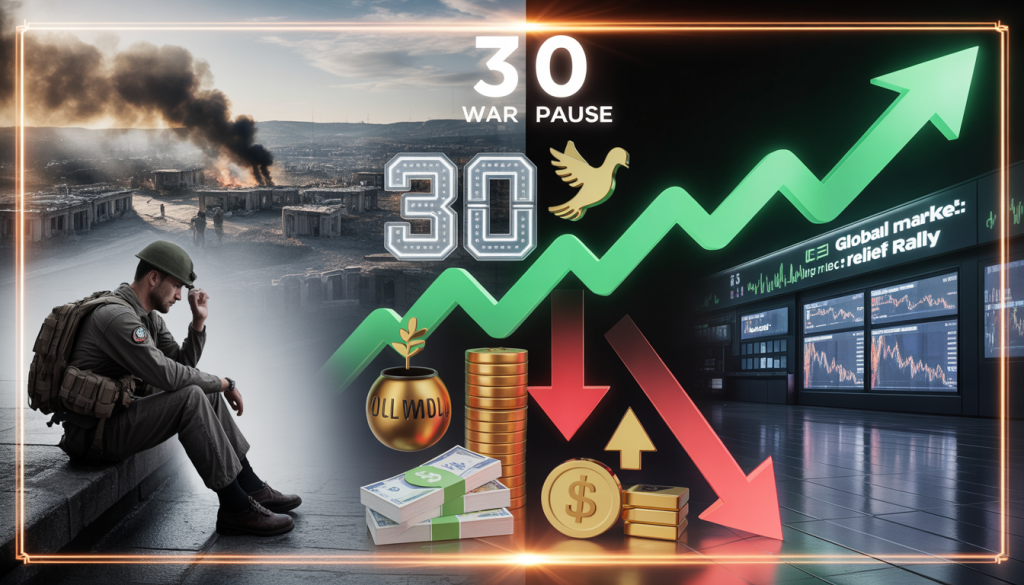
A geopolitical truce changes the rules of the financial game. Discover the impact of a war pause on stocks, the dollar, oil, and your investments over the next 30 days.
(Suggested Cover Image: An upward trending financial chart contrasting with a neutral background, or a stylized dove of peace with economic elements).
When the cannons fall silent, the markets speak volumes.
Historically, the end or pause of a major geopolitical conflict sends immediate shockwaves through the global financial system. Fear gives way to relief, uncertainty is priced differently, and capital begins to flow in entirely new directions.
But how does this affect your pocket in practice? Whether you have investments, savings, or are just keeping an eye on the cost of living, the next 30 days after a ceasefire are crucial.
Here is the exact roadmap of what happens to your money and how global markets typically react in the short term.
1. The “Relief Rally” in Stock Markets
The first and fastest reaction to a truce is the so-called “Relief Rally.” Markets hate uncertainty even more than they hate bad news. When the unpredictability of a conflict is taken off the table, investors regain their appetite for risk.
- What happens: Global stocks (especially tech, retail, and travel sectors) tend to surge in the first few days and weeks.
- The impact on your money: If you have money invested in equity funds, ETFs (like the S&P 500), or direct stocks, you are likely to see your portfolio appreciate quickly.
2. The Abrupt Drop in Commodities (Goodbye, Expensive Gold and Oil)
During wars, the price of raw materials skyrockets due to the fear of scarcity and supply chain disruptions. With a pause in the conflict, this “fear premium” disappears.
- Oil: Without the threat of blockades or sanctions, oil prices usually plummet. This means cheaper gas at the pump over the following weeks.
- Gold: Gold is the classic “safe haven.” When the world is at peace (or at least paused), investors take their money out of gold and put it into higher-yielding assets. Expect a downward correction in the price of the precious metal.
- Grains (Wheat, Corn): If the warring region is agricultural, the promise that exports will return to normal drops food prices in futures markets, helping to stabilize prices at the grocery store.
3. The US Dollar Loses Strength and Emerging Currencies Breathe
Just like gold, the US Dollar is a global safe haven during times of crisis. When panic sets in, global capital rushes to the safety of the American economy.
- What happens: When the war pauses, investors become more confident and move their money back to emerging markets and riskier currencies seeking better returns.
- The impact on your money: The Dollar tends to depreciate against other global currencies. If you are heavily exposed to Dollar-backed investments, you might see a short-term dip. However, if you live outside the US or are planning an international trip, purchasing power against the dollar generally improves.
4. Cryptocurrencies React as High-Growth Assets
Crypto has a complex relationship with geopolitics. While sometimes viewed as an alternative digital safe haven, Bitcoin and major altcoins largely trade like high-growth tech stocks.
- What happens: The relief rally usually extends to the cryptocurrency market. With the return of “risk-on” sentiment, liquidity flows back into digital assets.
- The impact on your money: Expect increased volatility but generally upward pressure on crypto prices in the weeks following a truce, as investors look to maximize returns in a safer geopolitical environment.
What Should You Do Next?
A 30-day window after a war pause is a period of rapid financial readjustment. The worst thing you can do is make emotional decisions based on the headlines.
Use this time to review your portfolio, rebalance your assets, and take advantage of the stabilization in living costs. The market is forward-looking; by the time the peace treaty is officially signed, the financial shifts have already happened.
Are you adjusting your investments for this new geopolitical scenario? Let me know in the comments below!
Want to actually take action instead of just reading?
Most people understand what they should do with money — the problem is execution. That’s why I created The $1,000 Money Recovery Checklist.
It’s a simple, step-by-step checklist that shows you:
and how to start building your first $1,000 emergency fund without overwhelm.
- where your money is leaking,
- what to cut or renegotiate first,
- how to protect your savings,
- and how to start building your first $1,000 emergency fund without overwhelm.
No theory. No motivation talk. Just clear actions you can apply today.
If you want a practical next step after this article, click the button below and get instant access.
>Get The $1,000 Money Recovery Checklist<
 Wealth Engine
Leave a comment