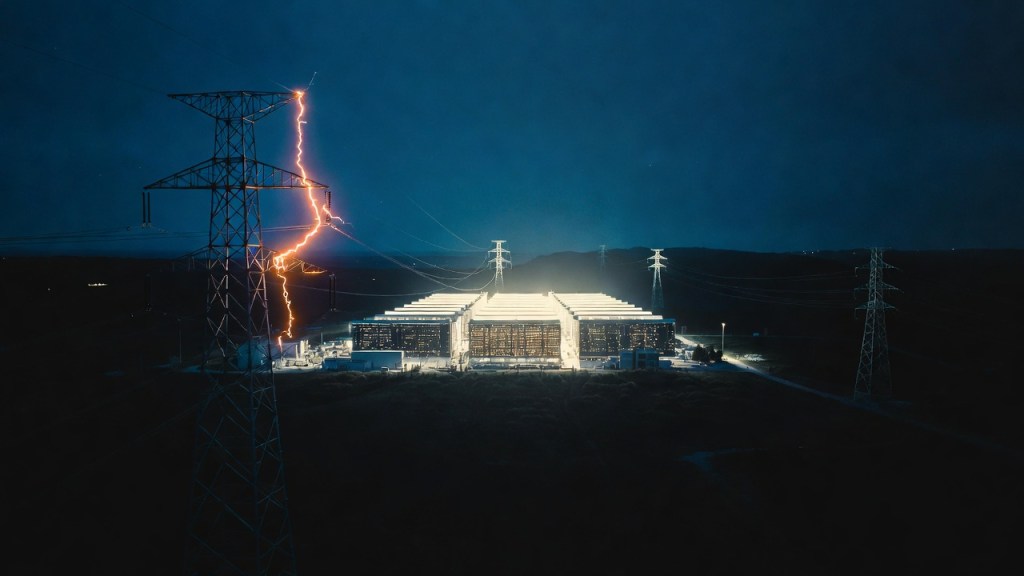
Everyone is watching the AI companies.
The chips. The models. The agents. The applications. That’s where the cameras are pointed, where the headlines go, where retail investors are piling in.
But the smartest institutional money in the world is quietly looking somewhere else entirely.
They’re looking at the wall.
Because in March 2026, the most powerful technological expansion in human history has run directly into a constraint that no amount of software engineering can fix: there is not enough electricity to power it.
And the companies positioned to solve that problem — the ones building the infrastructure that AI desperately needs but cannot exist without — are sitting at the beginning of what may be the most significant infrastructure investment supercycle of the 21st century.
Most retail investors haven’t noticed yet.
That is the opportunity.
The Problem Nobody Is Talking About Loudly Enough
Here are the numbers that are reshaping how serious money thinks about AI in 2026.
Today, the entire US data center sector consumes roughly 15 gigawatts of power. The pipeline of new data centers currently under construction — the facilities being built right now to handle AI workloads — will require somewhere between 70 and 90 gigawatts when fully operational.
That’s not a 20% increase. That’s a 5x to 6x increase in power demand from a single sector, hitting a grid that was largely built in the mid-20th century and has seen virtually no meaningful demand growth in two decades.
Morgan Stanley projects US data center demand could reach 74 gigawatts by 2028 — with a projected shortfall of 49 gigawatts in available power access. The International Energy Agency projects data center electricity use will more than double from 415 terawatt-hours in 2024 to 945 terawatt-hours by 2030.
By the end of 2028, AI infrastructure alone could consume the equivalent of 22% of all electricity currently used by American households combined.
The grid cannot handle this. Not even close. And the timeline mismatch is brutal: AI infrastructure expands on timelines measured in months. Power grid infrastructure expands on timelines measured in decades.
The average wait time for a grid connection in primary US data center markets now exceeds four years. Transformer lead times — the specialized equipment needed to connect new power generation to the grid — exceed 30 months due to supply chain bottlenecks. PJM Interconnection, the largest US grid operator serving over 65 million people across 13 states, is already projecting it will be six gigawatts short of reliability requirements in 2027.
The data center vacancy rate in key US markets sits at 1.4% — the lowest ever recorded. There is no slack in the system.
As the Uptime Institute’s executive director of research stated plainly: the scale and severity of the crisis emerging in 2026 will catch many operators unprepared. Power generation and distribution equipment is now the deciding factor in what can be built, how, and where — and the crisis is likely to last many years.
Why This Is Actually Good News for Investors
Constraints create winners.
Every time a critical resource becomes scarce, the companies that control that resource — or that solve the scarcity — generate extraordinary returns. Oil scarcity made Standard Oil. Semiconductor scarcity made TSMC. Cloud infrastructure scarcity made AWS, Azure, and Google Cloud into the most profitable divisions of the most valuable companies on earth.
The AI power constraint of 2026 is not a threat to the AI boom. It is the defining infrastructure investment opportunity that the AI boom has created.
The sector is experiencing what JLL — one of the world’s largest commercial real estate and infrastructure firms — formally described this week as “one of the largest infrastructure investment supercycles seen in the modern era.” Their analysis projects $3 trillion in required investment by 2030, with roughly 100 gigawatts of new capacity anticipated to come online — representing $1.2 trillion in real estate asset value creation alone.
This is not a niche opportunity. This is the backbone of the global economy being rebuilt in real time.
And the investment window, while open, will not stay open forever.
The 5 Categories of Winners Being Created Right Now
1. Nuclear Energy — The Comeback Nobody Expected
Three years ago, nuclear energy was widely considered a dying industry. Aging plants were being decommissioned. Public sentiment was hostile. The economics seemed unfavorable against cheap renewables.
In 2026, nuclear is the most sought-after power source in America. The reason is simple: AI data centers need power that is continuous, reliable, and carbon-free. Solar and wind are intermittent. Natural gas produces carbon. Nuclear delivers clean, always-on baseload power at the scale data centers require.
Microsoft, Alphabet, and Meta have all signed significant nuclear power agreements within the past 18 months to power their data centers. Three of the largest technology companies in America are now invested in nuclear energy production. The US Department of Energy has set a formal goal to triple America’s nuclear energy production by mid-century — with aggressive near-term milestones.
The publicly traded nuclear operators and uranium producers sitting at the intersection of this demand are not small companies making speculative bets. They are established infrastructure businesses with 20-year contracts being signed right now at prices that reflect structural scarcity.
2. Power Grid Infrastructure — The Boring Trade That Prints Money
Transformers. Transmission lines. Substations. Switchgear. Electrical components.
These are not glamorous investments. They do not have viral moments on social media. They do not appear in breathless AI coverage.
They are, however, the physical bottleneck constraining everything else — and the companies that manufacture and install them are facing demand that their production capacity cannot currently meet.
Transformer lead times exceeding 30 months means that every data center developer, every utility planning grid expansion, every hyperscaler building new facilities is placing orders now for equipment they won’t receive until 2028. The order books of grid infrastructure manufacturers are full in ways that haven’t been seen in generations.
This is a multi-year revenue visibility story for companies that most investors have never heard of.
3. Natural Gas Infrastructure — The Bridge Nobody Wants to Talk About
Renewable energy cannot provide the continuous, dispatchable power that AI data centers require — not without storage technology that does not yet exist at the required scale. Nuclear takes years to build. In the meantime, natural gas is filling the gap.
Data center operators are increasingly pursuing “behind-the-meter” generation — building their own dedicated natural gas power plants directly on-site, bypassing slow utilities entirely. Some markets, including Ireland and Texas, have implemented formal “bring your own power” mandates that are accelerating this trend.
The natural gas infrastructure companies — pipeline operators, LNG terminal operators, midstream processors — are seeing demand that cuts directly across the geopolitical oil crisis unfolding simultaneously. Domestic natural gas is insulated from Strait of Hormuz disruptions. It is competitive on price. And it is the only immediately deployable solution to the power shortage at scale.
4. Data Center REITs — Real Estate With an AI Tailwind
Data centers are real estate. And like all real estate, the operators who own the physical infrastructure — the buildings, the power connections, the cooling systems, the fiber connectivity — collect rent regardless of which AI application is running inside.
The data center REIT category has evolved from a niche real estate subsector into one of the most strategically important asset classes in the global economy. The largest operators are running occupancy rates that would be extraordinary in any property category. Their pricing power has never been stronger. Their development pipelines are constrained not by demand but by the power availability that every other category on this list is racing to address.
As the AI boom drives sustained demand for compute, the real estate that houses the compute becomes one of the most reliable long-duration income streams in the market.
5. Water Infrastructure — The Hidden Constraint Inside the Constraint
Here is the one that almost nobody is talking about yet.
AI data centers do not just consume electricity. They consume extraordinary quantities of water for cooling. A single large hyperscale data center can consume millions of gallons of water per day. In a world where water scarcity is already a significant challenge across the American Southwest, parts of Europe, and major Asian markets, the water demands of AI infrastructure are becoming a site selection constraint that rivals power availability.
The companies building advanced cooling technologies — liquid cooling, immersion cooling, closed-loop systems that dramatically reduce water consumption — are solving a problem that the industry has not fully priced yet. As regulatory pressure on water usage intensifies and water-scarce regions impose restrictions on data center development, the cooling technology providers become gatekeepers to the next wave of AI infrastructure build-out.
This is the least-discussed category on this list. It may produce the highest returns on a risk-adjusted basis.
What Your Electric Bill Has to Do With All of This
Here’s the part of this story that is personal for every American, not just investors.
The insatiable power demand of AI data centers is already showing up in household electricity bills — and it will show up more aggressively in the years ahead.
Energy economists at the Institute for Energy Economics and Financial Analysis have stated plainly that it is “almost inevitable” that ordinary Americans will end up subsidizing the wealthiest industry in the world through their utility bills, as grid infrastructure costs are socialized across all ratepayers rather than borne by the data centers generating the demand.
The White House brokered a voluntary “Ratepayer Protection Pledge” on March 4, 2026 — but experts widely doubt its effectiveness without formal regulatory backing.
This is not an abstract concern. It is already happening in regions with high data center density, where electricity prices for residential customers have risen measurably as generation capacity is stressed by industrial AI workloads.
Understanding this dynamic matters whether you’re an investor looking for opportunity or a household managing a budget. The AI energy crisis is not a distant event. It is arriving on your utility bill in real time.
The Framework for Thinking About This
The AI investment narrative in 2025 was dominated by model companies, chip manufacturers, and application software. Those were the obvious first-order plays — and many of them performed accordingly, pricing in significant optimism.
The AI investment narrative in 2026 and beyond will increasingly be shaped by second-order infrastructure plays — the companies that don’t make the AI but make the AI possible. The power generators. The grid infrastructure builders. The cooling technology providers. The nuclear operators. The data center landlords.
These companies are not priced for the world they’re about to operate in. They are still being valued on yesterday’s demand assumptions, by investors who are still looking at the glamorous first-order plays rather than the boring but essential infrastructure beneath them.
That gap between current valuation and emerging reality is where the serious money is already moving.
The wall is real. The companies solving it are real. The investment opportunity is real.
The question, as always, is whether you’re paying attention before the crowd catches up — or after.
Want to actually take action instead of just reading?
Most people understand what they should do with money — the problem is execution. That’s why I created The $1,000 Money Recovery Checklist.
It’s a simple, step-by-step checklist that shows you:
and how to start building your first $1,000 emergency fund without overwhelm.
- where your money is leaking,
- what to cut or renegotiate first,
- how to protect your savings,
- and how to start building your first $1,000 emergency fund without overwhelm.
No theory. No motivation talk. Just clear actions you can apply today.
If you want a practical next step after this article, click the button below and get instant access.
>Get The $1,000 Money Recovery Checklist<
This is not financial advice. Always conduct your own research and consult a qualified financial advisor before making investment decisions. If this gave you a useful framework for thinking about AI beyond the obvious plays, share it — and subscribe below for the next one.
 Wealth Engine
Leave a comment