It started on a Saturday.
February 28, 2026. US and Israeli forces launched Operation Epic Fury — a coordinated strike on Iranian nuclear infrastructure and military leadership. By Sunday morning, Iran had retaliated. By Monday, the Strait of Hormuz — the narrow waterway through which roughly one-fifth of the world’s entire oil supply flows every single day — was effectively closed.
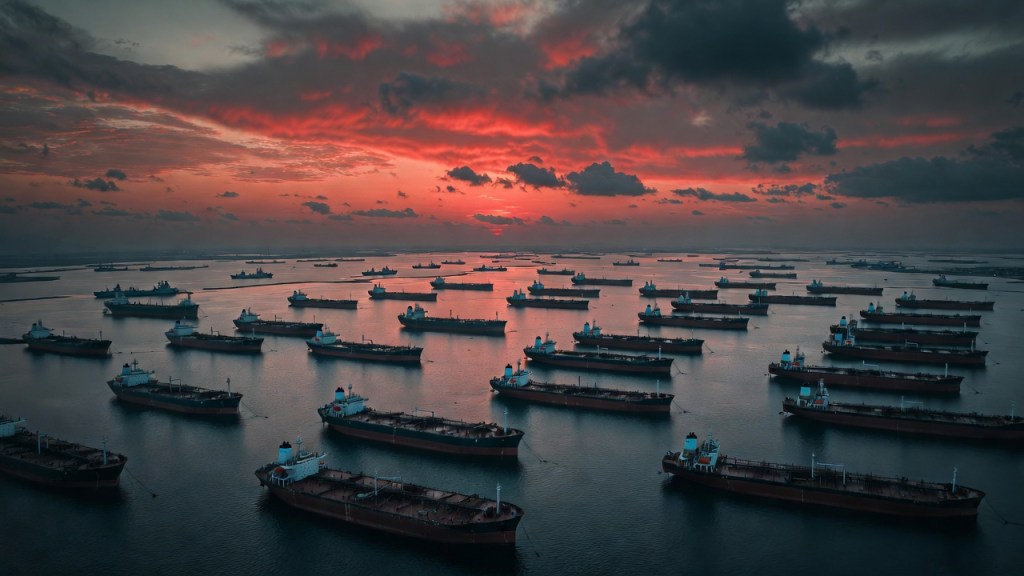
Tanker traffic collapsed from 24 daily vessels to just 4. Five tankers were struck by missiles. Insurance providers suspended coverage for the entire corridor overnight. Brent crude surged nearly 20% in a single week — the sharpest weekly rise since Russia invaded Ukraine in 2022.
By March 6, 2026, Brent had breached $89 per barrel. Goldman Sachs warned it could hit $100 if disruptions persist for five weeks. Other analysts are modeling $150 if the blockade holds for 30 days.
Meanwhile, the jobs report for February came in ugly. Markets across Asia and Europe went into freefall. The Nasdaq entered correction territory. Your 401(k) is doing things you don’t want to look at.
Here’s what almost no one is talking about: while most investors panic, a specific group of people are moving fast — and they’re not selling.
They’re buying. Quietly. Deliberately. And history says they’re going to be right.
Why Panic Is Always the Wrong Response — And the Data That Proves It
Before getting into what the smart money is doing, let’s address the noise.
Every financial crisis feels like the end of the world when you’re inside it. The 1973 oil embargo felt permanent. The 1979 Iranian Revolution felt permanent. The 2008 financial collapse felt permanent. None of them were.
Here’s the number that matters right now: out of the last ten times oil spiked 20% or more suddenly, markets were higher 90 days later in eight out of ten cases. That’s not a guarantee. But it’s a pattern that serious investors don’t ignore.
The people losing money in crises are almost always the people who make emotional decisions at the worst possible moment — selling at the bottom, hoarding cash, waiting for “certainty” that never arrives before the opportunity has already passed.
The people who build wealth through crises are the ones who have a framework before the crisis hits — and execute it while everyone else is frozen.
Here’s the framework the smart money is using right now.
What the Smart Money Is Buying This Week
1. Energy Stocks — Specifically US Producers
This one is straightforward, and the institutional money has already moved.
When oil spikes, integrated energy producers — companies that pull oil out of the ground domestically — print money. Their production costs are fixed. Their revenue just went up 20% in a week. The math is simple.
US shale producers are in a particularly favorable position right now. The Strait of Hormuz crisis has zero direct impact on their production. Meanwhile, every barrel they sell is priced against a global benchmark that just surged. Their margins expanded overnight.
The smart money moved into US energy names the moment Operation Epic Fury hit the wires. If you haven’t looked at this sector this week, you’re looking at it late — but not too late if the disruption persists.
2. Defense and Aerospace — The Uncomfortable Trade
Nobody likes to say it out loud. But every major military escalation in modern history has been followed by expanded defense budgets, accelerated procurement contracts, and significant stock appreciation in defense and aerospace companies.
This is not a political statement. It’s a capital flows observation.
The US defense budget was already elevated heading into 2026. Operation Epic Fury will generate procurement demand for missiles, drones, electronic warfare systems, and naval assets that will flow through contracts over the next 12 to 36 months. The companies positioned to receive those contracts are publicly traded.
Institutional investors are not squeamish about this. Defense sector ETFs saw significant inflows in the first 72 hours after the strikes began. If this conflicts with your values, that’s a legitimate position. But understand that others are making this trade right now.
3. Gold — But This Time the Case Is Different
Gold has been on a multi-year run, and the Hormuz crisis has added another leg to it.
Here’s what makes the current gold case more durable than previous spikes: it’s not just geopolitical fear driving the price. It’s the simultaneous combination of geopolitical risk, dollar debasement concerns, central bank buying at record pace, and now an oil shock that threatens to reignite global inflation just as central banks thought they’d contained it.
When inflation expectations rise, real interest rates fall. When real interest rates fall, gold goes up. That mechanism is very much in play right now.
The smart money isn’t buying gold as a panic trade. They’re buying it as the logical conclusion of a macro setup that was already compelling before February 28.
4. Alternative Energy Infrastructure — The Long Game Hidden Inside the Crisis
Here’s the trade that most retail investors completely miss because it requires looking three years out instead of three weeks.
Every time a major oil supply disruption hits, it accelerates the political and economic case for energy independence. The 1973 embargo triggered the US Strategic Petroleum Reserve. The 2022 Russia-Ukraine conflict triggered the largest peacetime energy investment program in European history.
The Hormuz crisis of 2026 is going to trigger a wave of investment in domestic energy infrastructure — nuclear, solar, wind, battery storage, LNG terminals, and pipeline capacity — that will take years to build out but will be funded aggressively starting now.
The companies positioned at the intersection of energy security and clean energy infrastructure are sitting on a multi-year runway of government contracts and private investment that the current crisis has just accelerated significantly.
This is not a trade for this week. It’s a position for the next three years — and the entry point just got more attractive because generalist investors are selling everything indiscriminately.
5. Shipping Companies — The Counterintuitive Play
150 container ships are currently sheltered in the Gulf, going nowhere. Maersk has suspended major shipping routes between the Middle East and Asia. Shipping costs jumped 7% in a single week.
The counterintuitive reality: when shipping costs spike, shipping companies that operate outside the affected corridor — trans-Pacific routes, Atlantic shipping lanes, Cape of Good Hope alternatives — see their pricing power and margins expand significantly.
The crisis in the Strait of Hormuz is a massive gift to shipping operators running alternative routes. Cargo that was going through Hormuz now has to go the long way — adding weeks and thousands of dollars per container — and operators on those routes can charge accordingly.
This is not widely discussed in mainstream financial media. It’s exactly the kind of second-order trade that separates sophisticated investors from the crowd.
6. Cash in the Right Currency — The Unsexy but Critical Move
Not every smart money move this week is a buy. Some of it is simply getting liquid in the right denomination.
The dollar is performing its traditional “flight to safety” role in the early stages of this crisis. But sophisticated allocators are watching the situation carefully — because a prolonged oil shock that reignites US inflation while simultaneously weakening global growth is a scenario where the dollar’s safe-haven status could come under pressure.
The Swiss franc and Japanese yen — traditional safe-haven currencies — are receiving significant inflows from institutional money managers who are hedging against a scenario where the dollar’s safe-haven status is tested.
This isn’t a call that the dollar collapses. It’s a positioning move that costs very little and pays significantly if the scenario materializes.
What You Should Actually Do Right Now
Here’s the honest version — not the version that sounds impressive at a dinner party.
If you’re not a professional investor: Do not make panic decisions. The single most statistically reliable mistake retail investors make in crises is selling at the bottom and buying back in after the recovery — locking in losses and missing the rebound. If your portfolio is appropriately diversified and your time horizon is longer than 18 months, the correct action for most people is nothing.
If you have dry powder and a framework: The energy sector is the most obvious near-term trade. Gold and defense have already moved but still have runway if the conflict extends. Alternative energy infrastructure is a multi-year thesis that this crisis has just accelerated.
If you have no existing positions: The worst time to build a portfolio is in a panic. The second worst time is when everything has already recovered. Crises create entry points that bull markets don’t offer — the question is whether you have the conviction to act when everything feels most uncertain.
Regardless of your investment position: Start thinking about your energy costs. Oil at $89 — and potentially $100 or higher — affects your gas prices, your utility bills, your grocery costs, and your airline tickets within weeks. Adjusting your spending now, before the pass-through inflation hits consumer prices fully, is practical risk management that everyone can do.
The Bigger Picture Nobody Is Saying Out Loud
The Strait of Hormuz crisis didn’t come out of nowhere. It is the latest — and most dramatic — manifestation of a fragility that the global economy has been building for decades.
The world built an energy system with a single point of failure: a 21-mile-wide passage between Iran and Oman. Roughly 20% of the planet’s daily oil consumption flows through it. There is no adequate backup. There is no realistic alternative that can be deployed quickly. The alternatives that exist — Saudi Arabia’s East-West Pipeline, the UAE’s Fujairah pipeline — can handle a fraction of normal Hormuz volume.
This is going to change. It has to change. And the investment capital flowing into the solutions to that fragility — domestic energy production, alternative routes, energy efficiency, non-fossil fuel sources — is going to be the defining investment theme of the second half of this decade.
The crisis you’re watching unfold this week is uncomfortable. It’s expensive. It’s frightening in some dimensions.
It is also one of the clearest signals the market has sent in years about where capital is going to flow for the next decade.
The smart money isn’t panicking.
It’s paying attention.
Want to actually take action instead of just reading?
Most people understand what they should do with money — the problem is execution. That’s why I created The $1,000 Money Recovery Checklist.
It’s a simple, step-by-step checklist that shows you:
and how to start building your first $1,000 emergency fund without overwhelm.
- where your money is leaking,
- what to cut or renegotiate first,
- how to protect your savings,
- and how to start building your first $1,000 emergency fund without overwhelm.
No theory. No motivation talk. Just clear actions you can apply today.
If you want a practical next step after this article, click the button below and get instant access.
>Get The $1,000 Money Recovery Checklist<
This is not financial advice. Always do your own research and consult a qualified financial advisor before making investment decisions. If this gave you a useful framework, share it — and subscribe below for the next one.
 Wealth Engine
Leave a comment