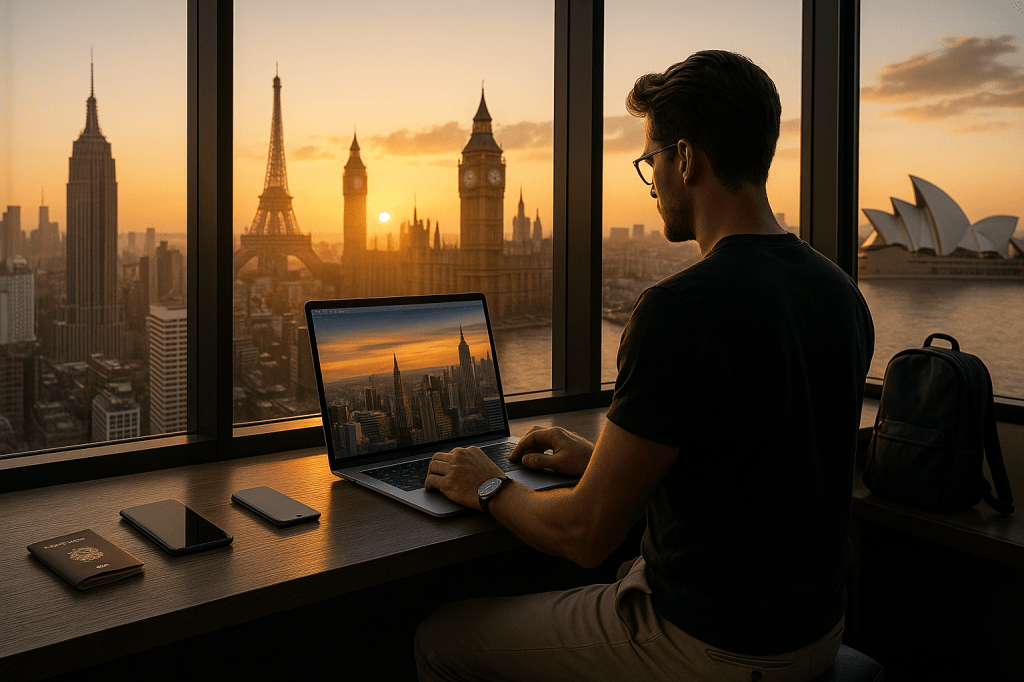
The Rise of Liquid Wealth, Global Living, and the End of the “Forever Home” Mindset
Real estate has long been the holy grail of wealth building.
“Buy property. It never goes down.”
“Build equity. Stop paying rent.”
“Own your home. That’s real security.”
But in 2025, a new wave of millionaires is breaking this mindset completely.
They’re not buying houses. They’re not locking into 30-year mortgages. And they’re not building wealth the way their parents did.
Instead, they’re prioritizing agility, digital income, low overhead, and the ability to move freely — physically and financially.
Here’s why the richest, most flexible, and globally minded individuals are saying no to owning real estate — and what they’re doing instead.
1. MOBILITY IS WORTH MORE THAN MORTGAGES
Today’s wealthy don’t want to be tied down. They want:
- Seasonal freedom (Bali in winter, Europe in summer)
- Global arbitrage (earn in USD, live in cheaper countries)
- Rapid relocation if a country’s policies, taxes, or safety changes
- No geographic limitations on business or creativity
Owning property slows that down. Renting = flexibility. Mobility = optionality.
“The rich don’t buy roofs — they buy time.”
Many modern entrepreneurs and creators operate globally, leveraging time zones and cost-of-living differences. A mortgage anchors them to one timezone, one set of rules.
Instead, renting allows them to follow opportunity — wherever it appears.
2. REAL ESTATE ISN’T ALWAYS PASSIVE OR LIQUID
Contrary to popular belief:
- Property can take months (or years) to sell
- Markets fluctuate (ask anyone who bought in 2007 or 2021)
- Tenants, taxes, and maintenance are real headaches
Modern millionaires prefer assets they can move or exit in 24 hours:
- Crypto wallets
- Online businesses
- Automated info products
- Scalable services with low physical overhead
“If I can’t sell it in a weekend, I don’t want it.”
This mindset is about control. A home is an asset — but not one you can easily tap when volatility strikes. And in a world that’s changing fast, liquidity is king.
3. OPPORTUNITY COST IS REAL
A down payment of $300,000 could become:
- $600K+ with the right startup investment
- $1M+ in a leveraged digital business
- $20K/month in passive income from online assets
- Equity in media channels, productized services, or community-owned IP
These new millionaires think like capital allocators, not traditional consumers. They ask:
- How fast can this compound?
- How easy is it to scale?
- What’s the risk if I’m wrong?
Instead of locking capital into static assets, they focus on high-velocity returns.
“Assets should cash flow — not just sit on a street.”
4. THE DIGITAL MILLIONAIRE LIFESTYLE IS GLOBAL BY DEFAULT
Most internet millionaires:
- Live in Airbnb-style apartments
- Use premium co-living spaces and long-term hotels
- Have global healthcare, cloud-based teams, and second passports
- Travel based on weather, opportunity, and community
Why anchor in one city, when your life is online?
Whether they’re consulting for Fortune 500s or building a faceless media empire, their operations are remote-first, borderless, and passport-agnostic.
And with global infrastructure improving, from eSIMs to fast banking APIs, they can operate more efficiently than a VC-backed company with office rent.
5. REAL ESTATE IS STILL GREAT — THEY JUST DON’T LIVE IN IT
Let’s be clear: They still invest in real estate.
But not the traditional way.
They prefer:
- REITs (Real Estate Investment Trusts)
- Crowdfunded platforms (like Fundrise or RealtyMogul)
- Airbnb arbitrage or commercial spaces they never step foot in
- Tokenized real estate or fractional ownership opportunities
In short: they control property, but don’t commit to it.
These approaches offer the upside of real estate (diversification, yield, appreciation) without the overhead of owning and managing property personally.
6. THEY VALUE FREEDOM MORE THAN STATUS
For past generations, homeownership = success.
Today? It can mean:
- Debt
- Inflexibility
- Stagnation
The new elite values:
- Time
- Optionality
- Digital income
- Global lifestyle
- Psychological freedom
Their identity isn’t tied to a front porch — it’s tied to passports, Wi-Fi, and scalable systems.
They don’t want to impress the neighborhood. They want to impress themselves — by building leverage, choosing peace, and owning their hours.
BONUS: WHERE THEY’RE INVESTING INSTEAD
- Digital products: Courses, templates, newsletters, media IP
- Online brands: DTC stores, niche SaaS, solopreneur tools
- Personal media: YouTube, podcasts, TikTok, newsletters
- Alternative assets: Crypto, royalties, micro-acquisitions
- Geopolitical diversification: Multiple residencies, passports, offshore accounts
They don’t fear volatility — they build antifragile systems that benefit from it.
SECURITY ISN’T IN BRICKS — IT’S IN OPTIONALITY
The wealthiest people in 2025 aren’t building equity in one location.
They’re building systems, leverage, and digital liquidity.
They’re saying no to houses — and yes to freedom.
They’re rejecting permanence — and embracing optionality.
They’re not buying roots. They’re buying wings.
“In a world that changes weekly, the smartest wealth is portable.”
Want to learn how to build portable wealth, invest without borders, and live globally? Subscribe now. We break it down weekly.
 Wealth Engine
Leave a comment