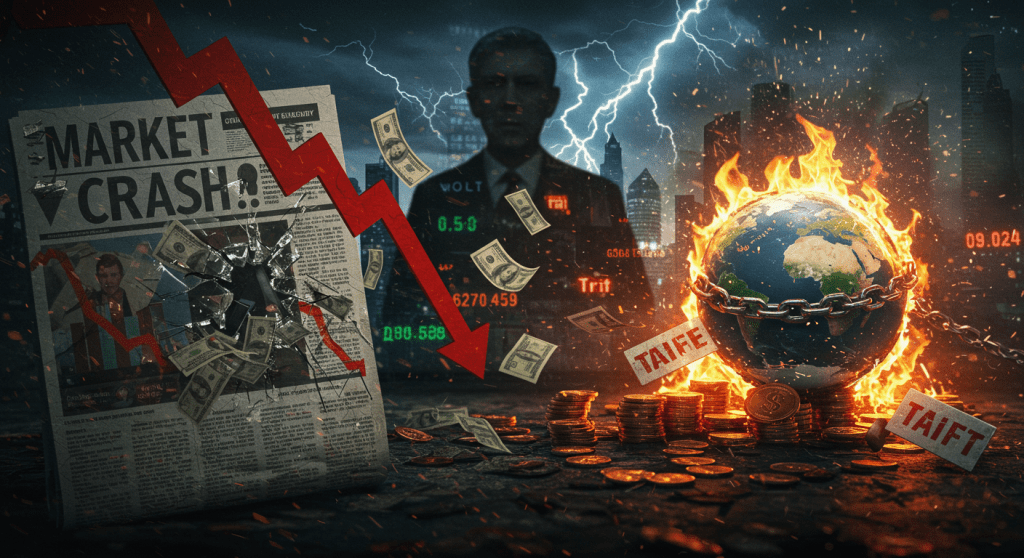
What Investors, Businesses, and Consumers Need to Know About the New Tariff Shockwave
April 2025 marked a pivotal moment in global finance and international trade. On April 2nd, former U.S. President Donald Trump, now a prominent political figure and leading candidate for the upcoming election, announced sweeping new tariffs on imports into the United States. Marketed as a move to restore American economic strength and protect domestic industries, these tariffs have instead triggered widespread volatility in financial markets and raised alarms among investors, economists, and everyday consumers.
This blog post will break down what happened, how the markets reacted, and what it means for your finances.
What Are the New Tariffs?
On what Trump has referred to as “Liberation Day,” the U.S. announced a flat 10% tariff on all imported goods. Additionally, the administration levied targeted tariffs as high as 60% on goods from China and up to 104% on select products. The rationale behind the move, according to Trump’s campaign, is to discourage reliance on foreign manufacturing and reinvigorate American production.
However, critics argue that this sweeping protectionist strategy could backfire, hurting American consumers and businesses by raising costs and disrupting supply chains.
Quick Facts:
- 10% universal tariff on all imports
- 60% average on Chinese goods
- Up to 104% on targeted high-tech and automotive imports
- Implemented without congressional approval via executive order
Market Reactions and Financial Fallout
The financial impact of the April 2nd tariff announcement was immediate and severe. The S&P 500 fell more than 10% in two trading sessions — its sharpest two-day decline since the onset of the COVID-19 pandemic in 2020.
Bond markets were also shaken. U.S. Treasury yields surged as investors feared that inflation would rise sharply due to higher import costs. The yield on the 10-year Treasury note jumped to its highest level in over a decade.
Major Market Responses:
- S&P 500: –10.4% in two days
- Dow Jones: Lost over 3,200 points
- Nasdaq: Tech sector hardest hit
- Gold: Spiked as a safe haven asset
- Oil: Increased on fears of supply disruptions
Business Impact and Corporate Uncertainty
Many major U.S. and international companies have already started adjusting their financial outlooks. Delta Air Lines, Diageo, and other multinational firms withdrew earnings guidance, citing unpredictability in supply costs and shifting trade routes.
Small and mid-sized businesses, particularly those dependent on imported goods or global components, now face rising operational costs. Retailers have warned that product prices will inevitably rise, affecting everything from electronics to clothing and even groceries.
Key Quotes:
- “We simply can’t forecast with this level of policy instability,” said the CFO of a Fortune 100 manufacturing firm.
- “These tariffs are a tax on the American consumer,” warned the U.S. Chamber of Commerce.
Consumer Impact and Inflation Risks
Perhaps the most immediate effect for average Americans will be inflation. With the cost of imported goods rising, consumers may face price hikes across a broad range of everyday items. A recent analysis by Moody’s Analytics suggests that the average household could see an additional $4,900 per year in costs due to these tariffs.
Top Affected Categories:
- Electronics and smartphones
- Automobiles and car parts
- Home appliances
- Processed foods
- Clothing and textiles
Additionally, if inflation persists, the Federal Reserve may be forced to raise interest rates further, despite already tight financial conditions — potentially leading to a recession.
Global Repercussions and Trade Tensions
International responses have been swift and vocal. China has threatened retaliatory tariffs. The European Union has condemned the move and hinted at formal complaints to the World Trade Organization (WTO). Many fear a full-scale trade war could develop, impacting global GDP and destabilizing emerging markets.
Geopolitical Concerns:
- Rising tensions between U.S. and China
- EU exploring countermeasures
- Developing countries caught in the middle
Experts warn that supply chains — already weakened by years of COVID-related disruptions — may be tested once more. This could delay shipments, increase costs, and reduce product availability globally.
What Should You Do Now?
In times of financial uncertainty, staying informed is your most powerful tool. Whether you’re an investor, a small business owner, or simply someone trying to manage a monthly budget, these policy changes matter.
Actionable Tips:
- Diversify investments into safe-haven assets (e.g., gold, bonds).
- Re-evaluate international exposure in stock portfolios.
- Prepare for higher prices — consider budgeting for inflation.
- Watch the Fed closely — interest rate decisions will be crucial.
- Stay informed by following reliable economic news sources.
As April 2025 continues to unfold, all eyes remain on Washington, the Fed, and international trade leaders. This is a moment of transformation for global economics — and your financial strategy should evolve with it.
Want more updates like this? Subscribe to our newsletter and never miss a critical market shift.
 Wealth Engine
Leave a comment