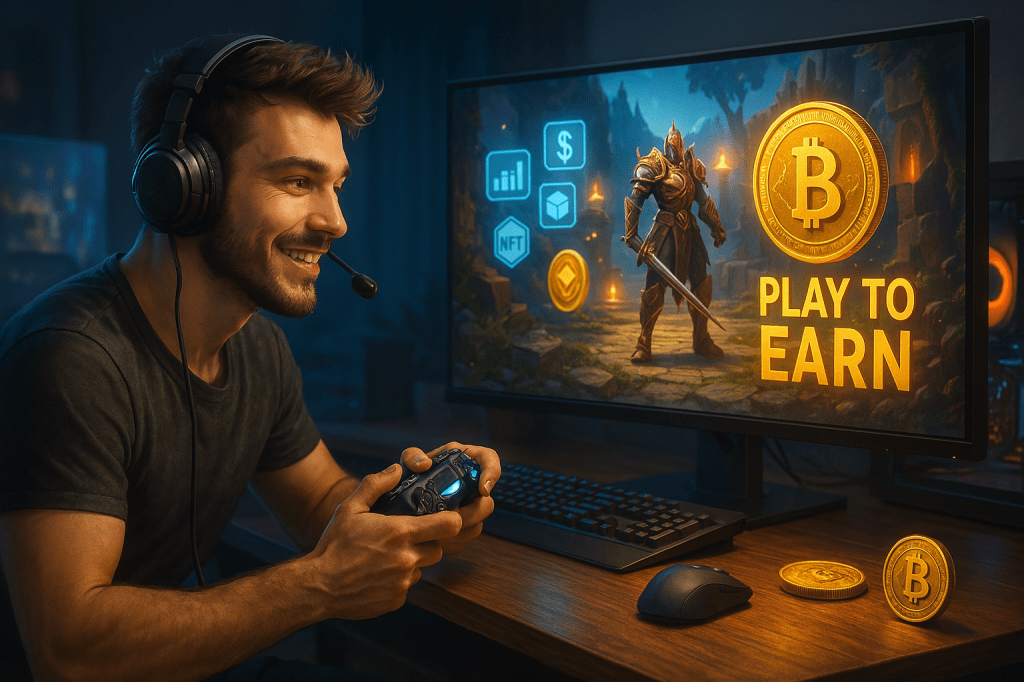
In 2025, the line between gaming and finance is rapidly blurring. Welcome to the world of GameFi—short for “Game Finance”—a revolutionary blend of blockchain technology, decentralized finance (DeFi), and gaming. It’s not just about playing for fun anymore. Now, gamers are playing to earn, invest, and build wealth in fully digital economies.
As GameFi matures, it’s no longer a niche experiment. It’s a booming sector with multi-billion-dollar potential, transforming both the gaming industry and the global financial landscape. In this blog post, we’ll explore what GameFi is, how it works, why it’s booming in 2025, the top platforms and projects, risks and challenges, and how players and investors can take advantage of this new frontier.
What Is GameFi?
GameFi (Game + Finance) is the integration of blockchain-based financial mechanisms into video games. These games reward players with cryptocurrencies or NFTs (non-fungible tokens), allowing them to:
- Earn real money for in-game achievements
- Trade or sell digital assets like weapons, characters, and land
- Stake tokens to earn yield
- Participate in decentralized governance
This model empowers players by giving them true ownership over digital assets and the ability to monetize their time and effort.
Key Features of GameFi
🎮 Play-to-Earn (P2E)
Instead of just consuming content, players generate value. They earn crypto rewards by completing tasks, winning battles, or participating in virtual economies.
🌐 True Digital Ownership with NFTs
Every in-game item can be represented as a unique NFT. This means players own their assets and can trade, sell, or rent them on open markets.
💸 Integrated DeFi Mechanics
Players can:
- Stake tokens to earn interest
- Use liquidity pools
- Lend and borrow digital assets
- Participate in token farming and governance
🔁 Interoperability
Some GameFi platforms are working toward interoperable economies where users can bring assets across games and ecosystems, creating a larger, unified metaverse.
Why GameFi Is Exploding in 2025
1. 📈 Massive Growth in the Gaming Industry
Gaming has surpassed the film and music industries combined in revenue. With over 3 billion global players, there’s a huge audience for GameFi to tap into.
2. 📱 Blockchain Accessibility
Improved UX, faster Layer-2 chains, and mobile-first platforms have removed barriers that once held back adoption.
3. 💼 New Income Models
In developing economies, GameFi is offering a viable income source, turning gamers into entrepreneurs.
4. 🤝 Partnerships With Major Brands
Big brands and gaming studios are entering GameFi to expand their reach and monetize intellectual property in new ways.
Top GameFi Platforms and Projects in 2025
🔥 Axie Infinity (Reborn)
After its early surge and decline, Axie has returned with upgraded mechanics, improved tokenomics, and a focus on sustainability.
🌲 Illuvium
A AAA-quality open-world RPG with stunning visuals, asset ownership, and interoperable gameplay.
🚀 Star Atlas
A space exploration game with real-time strategy and economic systems that integrate crypto.
🛡 Guild of Guardians
A mobile RPG that lets players earn rewards through guild gameplay and NFT trading.
🧱 The Sandbox & Decentraland
Although focused on metaverse, these platforms host countless GameFi experiences that mix creativity, land ownership, and income generation.
GameFi Business Models: How Players Earn
🎁 Daily Rewards and Missions
Complete daily tasks or logins to earn tokens or items.
🏆 Competitive Play
Enter PvP arenas or tournaments with crypto prize pools.
🧱 Asset Ownership & Trading
Buy low, sell high—flipping NFTs can be profitable when done strategically.
💰 In-Game Economies
Participate in farming, crafting, or resource gathering that feeds into the virtual market.
📈 Passive Income Through Staking
Stake the platform’s token to earn yield, governance rights, or bonus rewards.
The GameFi Investment Opportunity
📊 Tokenomics Matter
Look for games with:
- Low inflation tokens
- Good burn mechanics
- Long-term utility
🪙 Governance Tokens vs. Utility Tokens
Governance tokens allow players to vote on development decisions. Utility tokens are used in-game for purchases, upgrades, and rewards.
🌍 Marketplaces and DAOs
Some GameFi ecosystems operate like mini economies, with marketplaces governed by DAOs (Decentralized Autonomous Organizations).
🏦 Institutional Interest
Venture capital and major tech firms are investing in GameFi studios, token launches, and infrastructure—signaling a maturing market.
Risks and Challenges
⚠️ Ponzi-Like Token Models
Some games promise huge returns with unsustainable tokenomics. Always DYOR (do your own research).
🛠 Technical Complexity
Blockchain wallets, gas fees, and NFTs can be confusing for new users.
🧩 Game Quality
Not all GameFi titles offer compelling gameplay. The best ones combine fun + profit—not just speculation.
🏛 Regulatory Uncertainty
Governments are watching the crypto space. GameFi platforms must comply with financial and gaming regulations.
The Future of GameFi
🤖 AI-Powered GameFi
AI will enhance NPC behavior, procedurally generated missions, and personalized in-game experiences.
🔮 VR and AR Integration
Immersive technologies like virtual reality will merge with GameFi to create more realistic and engaging experiences.
🧠 Learn-to-Earn Models
Educational GameFi platforms will reward users for completing learning modules, helping onboard more users into DeFi and crypto.
📱 Mainstream Adoption
Expect GameFi to move from niche communities to app stores, consoles, and mainstream eSports tournaments.
Final Thoughts
GameFi is not just a trend—it’s the future of both gaming and finance. In 2025, it represents the evolution of play: from entertainment to empowerment.
Whether you’re a gamer, investor, developer, or entrepreneur, understanding GameFi today can open the door to massive opportunities tomorrow.
💡 Play. Earn. Own. That’s the future.
Stay ahead, stay strategic—and let the game begin.
Ready to dive deeper into GameFi? Let us know in the comments or subscribe for the latest trends in the future of finance, tech, and digital freedom.
 Wealth Engine
Leave a comment